Strong evidence shows that children who attend top-quality Pre-K programs are not only better prepared for Kindergarten but enjoy academic and social benefits that can last into adulthood. A recent study by the Learning Policy Institute showed that when compared to children who did not attend preschool, children who attend a Pre-K program are:
Less likely to be identified as having special learning needs or help in school
Better prepared for a structured school day
More grounded in math and literacy skills
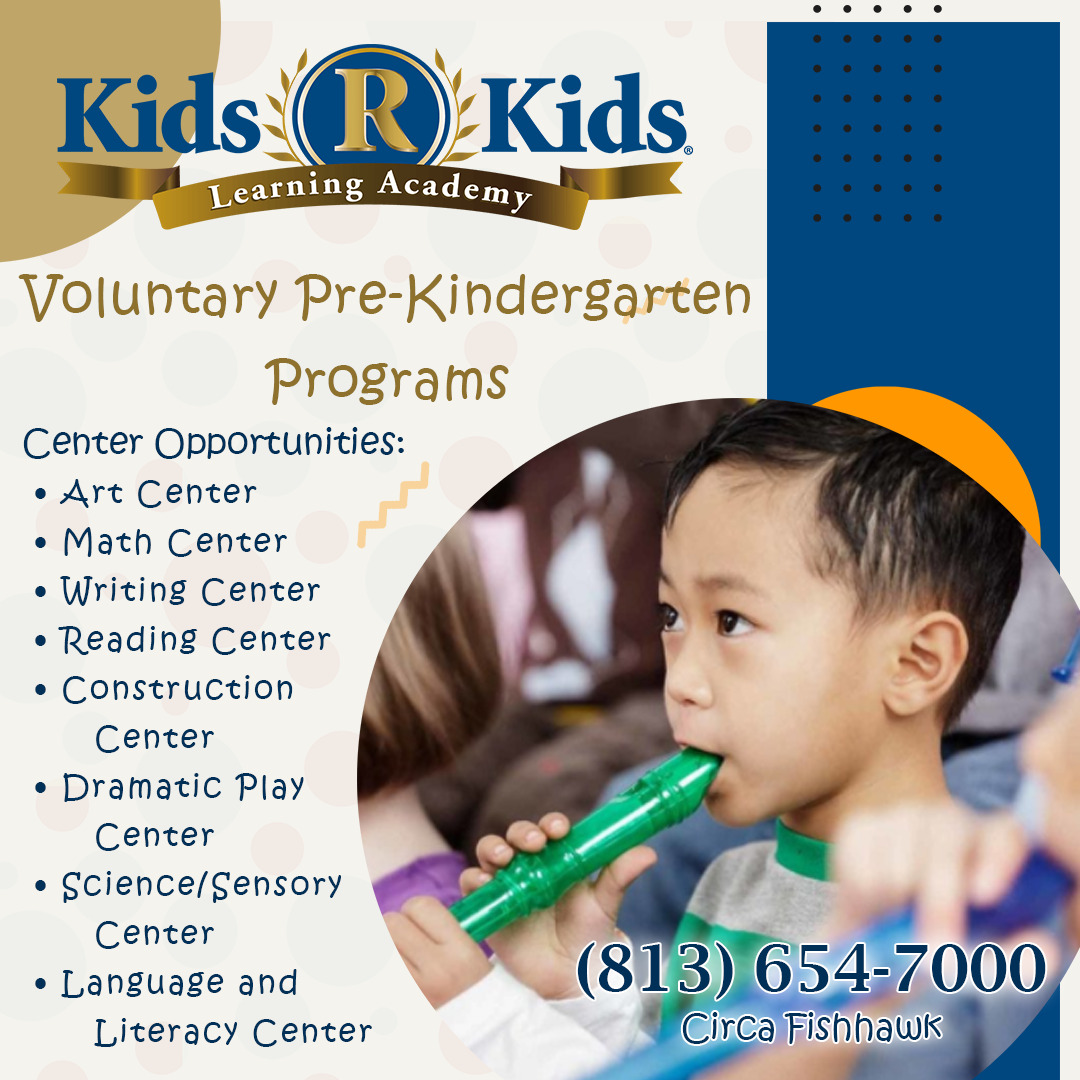
To ensure that all children have an opportunity to attend preschool, Florida offers Voluntary Prekindergarten (VPK), a free Pre-K program for 4- and 5-year-olds. Studies have shown that the most critical time in a child's brain development is before Kindergarten. All-day and after school programs run by an accredited preschool like Kids' R’ Kids Learning Academy in Lithia, Florida, help strengthen the intellectual, social, physical, and emotional skills of children while keeping them safe.
Top Benefits of Preschool
Florida started VPK in 2015 to help prepare children for Kindergarten and put them on the path towards academic success. Studies show that structured learning from all-day and after school, preschool programs results in:
Kindergarten-readiness and academic success
Research demonstrates that children who attend a high-quality, curriculum-based preschool are:
More likely to score higher in reading and math
More likely to graduate from high school and find employment
Less likely to have substance abuse issues or get arrested
Social and emotional development
Pre-K programs encourage emotional and social growth by teaching children to:
Share and take turns
Self-regulate emotions
Demonstrate empathy
Physical health
Through play-based learning, preschools help children develop fine motor skills and full-body movement, which results in:
Improved coordination and balance
Enhanced ability to write, type, and draw
Understanding of the role exercise and nutrition play in a healthy lifestyle
How to Participate in VPK and other FAQs
Here are answers to some frequently asked questions about VPK:
Who is eligible? Children who are 4 years old before September 1
Who provides VPK services? Families can choose a local provider like Kids ‘R’ Kids Learning Academy in Lithia, FL, or find one through the VPK directory
How many hours a day is a VPK program? A child can attend a maximum of 540 hours annually, and many providers offer flexible schedules, including before and after school programs
What is the cost? The VPK program is free, but providers might charge for additional childcare services
How do I register? Register for VPK here and then present your certificate of eligibility to a VPK preschool provider
Looking for a VPK Preschool in Lithia, FL?
Kids ‘R’ Kids Learning Academy in Lithia, FL, is a VPK provider that offers students much more than a daycare or after school care program. Its Pre-K program is designed to encourage academic, physical, and emotional growth through curriculum-based play and activities.
Kids ‘R’ Kids Learning Academy, located at 5815 Kids Crossing Dr., Lithia, FL 33547, has a strong history of satisfying parents by preparing their children for Kindergarten and future academic success.
Family-owned and operated, Kids ‘R’ Kids Learning Academy offers a nurturing and safe environment that provides:
Online video monitoring of the child’s classroom
Creative and fun accredited learning programs
Nutritious snacks and meals prepared on-site
Gated playgrounds
Flexible drop-off and pick-up hours
Interested parents should call Kids ‘R’ Kids Learning Academy today at 813-654-7000 or contact them online to schedule a visit.
At Kids ‘R’ Kids Learning Academy of Circa FishHawk, the most cherished principle is “Hug First, Then Teach.” This principle defines every aspect of the administration, staff, and teachers.
The whole child approach to learning is unlike many daycare centers or preschools. Kids ‘R’ Kids Learning Academy of Circa FishHawk works to strengthen and encourage every child’s emotional, intellectual, social, and physical well-being through the expertise of the childcare providers and a unique partnership with parents. The key to success at theeducational preschoolis a family-oriented staff dedicated to providing a secure, nurturing environment.
Sign Language: A Powerful Tool in the Whole Child Approach
One of the most powerful tools at the disposal of the Kids ‘R’ Kids teachers is sign language. According to education specialist Dr. Claire Vallotton inSigning with Babies and Children, “There are many benefits of using signs with students – from as young as preverbal infants, to those in early elementary, all the way to adult students who struggle with reading or those who are learning a new language. Research has also shown benefits for children with special needs including dyslexia, language impairments, Down syndrome, and Autism Spectrum Disorders, as well as for both hearing and deaf children in an inclusive education environment. Thus signs can be used to enhance education for learners of a wide range of ages and abilities. The benefits of signing are not just for the students, but for teachers, too. When children can communicate more clearly, teachers can respond to them more easily, and teachers feel more competent in their own work. In the last three decades, we’ve witnessed an amazing partnership between families, teachers, and researchers. This partnership created the impetus for the early research and the momentum for studies that followed. As we move into the future, our work will continue, fed by breakthroughs in neuroscience and technology which will lead to even more exciting discoveries about how signing influences human interactions and learning.”
Sign Language Facts
According to the University of Vermont, “American Sign Language (ASL) is a complete, complex language that employs signs made with the hands and other movements, including facial expressions and postures of the body.”
American Sign Language (ASL) is classified as a world language like French or Spanish. Therefore, children who know American Sign Language are considered bilingual.
250,000 to 500,000 people, including the children of deaf parents, use sign language.
Sign language and finger spelling accommodate several learning styles, including kinesthetic, interpersonal, and verbal-linguistic.
The formal and informal use of sign language strengthens the memory by communicating information through multiple pathways, including seeing, hearing, and movement.
Learning ASL, in conjunction with a spoken language, utilizes both sides of the brain, which increases brain stimulation while enhancing memory and strengthening recall.
Recognizing that American Sign Language and deaf culture are legitimate fields of study, colleges and universities are beginning to accept ASL for foreign language entrance and exit requirements.
“Home sign” is a highly individualized and very complex form of sign language used by hearing families with deaf children.
The Gallaudet Dictionary of the American Sign Language has over 3,000 illustrated entries.
Infant and Toddler Developmental Facts
Months six through seven: Infants can recognize and remember a sign
Month eight: Babies start signing single words and imitating gestures
Two years old: Children can sign compound words and full sentences
Early exposure to signing aids infants in the development of language and reasoning skills. Infants without sign language skills are limited to crying as the only means to communicate their needs. Babies who sign are learning how to communicate with words and simple phrases.
Benefits of Learning and Using Sign Language
Accelerates speech development in infants
Decreases frustration in young children by giving them a way to express themselves before they know how to talk
Strengthens parent-child bonding
Empowers babies to communicate vital information such as pain and hunger
Improves self-confidence and self-esteem
Lowers the frequency of anger due to an inability to communicate
Cognitive Benefits of Sign Language
Elevates IQ by twelve points
Reinforces the mastery of educational concepts such as ABC’s, animals, and other specific themes
Helps children remember words through muscle memory involvement
Sharpens attentiveness to social gestures of others as well as of themselves
Enlarges the verbal vocabulary
Enables the formation of longer, more complex sentences
Encourages reading and creates a larger reading vocabulary
Raises grades in school
Improves scores on standardized testing in younger children by 17% over children who do not know ASL
Parents and caregivers of hearing children are becoming more aware of the wide-ranging benefits of teaching their children sign language. Parents can reinforce the signing their children learn at the Kids ‘R’ Kids Learning Academy of Circa FishHawk by using sign language in the home and in life. The practice of teaching sign language to children who can hear will continue to expand because of the many benefits everyone enjoys when they use it, especially when communicating with someone who is deaf.
Kids ‘R’ Kids Learning Academy of Circa FishHawk strives to create an environment in which every child feels safe, loved, and inspired. Thepreschool learning centeris committed to providing a solid educational foundation, well-trained teachers, and a secure environment where children can flourish intellectually, socially, emotionally, and physically.
To learn more about theCirca FishHawk, FL, preschool, contact Kids ‘R’ Kids Learning Academy of Circa FishHawk by phone at (813) 654-7000.
First Published on: Blog – Circa Fishhawk https://kidsrkids.com/circa-fishhawk/preschool/preschool-learning-center-in-circa-fishhawk-teaches-sign-language/
Parents want what is best for their children, particularly when deciding on childcare and early childhood education options. One typical decision parents often make is whether to send their children to preschool or daycare. When considering the options, it is helpful to understand the distinctions between preschool and daycare so that parents can make the best choice for their child.
Often, people use the words “preschool” and “daycare” interchangeably. While there is occasionally some overlap, preschool and daycare generally have a different approach and offer different services to parents and children.
Education vs. Supervision
Fundamentally, the difference between preschool and daycare is a focus on education. Preschool programs are designed to prepare children for the formal school environment and introduce them to basic educational concepts, such as numbers, shapes, and letters. In addition, art, games, and other fun activities are incorporated into the preschool experience. Because preschools serve to introduce young children to a program that resembles the primary school schedule, preschool tends to be more structured and organized.
Daycare, on the other hand, takes more of a supervisory approach. Daycares mainly offer childcare services while the parent or guardian of the child is away at work or taking care of other commitments. Rather than intentionally preparing children for school, daycare focuses on meeting the basic needs of children. Activities such as playtime, mealtime, naptime, and TV time make up a large part of the daycare experience. Although the emphasis at daycare is not primarily educational, some daycares offer learning opportunities and academic curriculum.
Hours of Operation
Because preschools are focused on teaching early learners as opposed to simply providing childcare services, they operate within fewer hours than do daycares. While preschools last for a few hours or a half-day, daycare services are usually available on a timeframe that is convenient for working parents. For example, daycares generally open in the early morning so that parents can drop off their children before heading on to work. After getting off work, parents pick their children up from daycare later in the afternoon or even in the early evening.
Also, preschools tend to observe holidays and close during the summer, similar to the traditional school schedule. Daycares operate on a much broader schedule, providing childcare throughout the year.
Teachers and Caregivers
All states have requirements stating that teachers at both preschools and daycares must have a minimum amount of experience. Because preschools are more geared towards laying down an educational foundation, their staff may have a wider breadth of experience.
Preschool or Daycare: Which Is the Right Choice?
Preschools and daycares each offer their own benefits, and only a family can decide what is best for their schedule and the needs of their child. One family may want to prepare their child for school while another family needs the flexibility that daycare offers.
However, if early educational instruction is what a family is looking for, then apreschool learning centeris the clear choice. The structured approach helps children adapt quickly to kindergarten, and the educational emphasis provides young learners with a solid foundation for their K-12 journey. By encouraging children in their interests, preschool teachers guide each child in fun activities that foster essential learning skills.
Writing forParents.com, Kathleen McCartney, Ph.D., the dean of Harvard Graduate School of Education, notes, “There’s increasing evidence that children gain a lot from going to preschool. At preschool, they become exposed to numbers, letters, and shapes. And, more important, they learn how to socialize — get along with other children, share, contribute to circle time.”
The Kids ‘R’ Kids Learning Academy Difference
Unlike many daycare centers or childcare providers, the Kids ‘R’ Kids Learning Academy methodology focuses on a whole-child approach. Teachers welcome diversity, and programs encourage each child’s individual strengths and interests. Guided by the expertise of the teaching team and a partnership with parents, Kids ‘R’ Kids Learning Academy of Circa FishHawk strives to strengthen and nurture the intellectual, social, emotional, and physical well-being of children.
For more information about the Circa FishHawk, FL preschool, visit the Kids ‘R’ Kids Learning Academy of Circa FishHawk website atkidsrkids.com/circa-fishhawk. The staff can be reached by phone at (813) 654-7000.
First Published on: Blog – Circa Fishhawk https://kidsrkids.com/circa-fishhawk/preschool/preschool-and-daycare-how-are-they-different-and-which-is-the-right-choice/
At Kids ‘R’ Kids Learning Academy, teachers use a curriculum that is supported by leading educational theories. Thepreschool learning center’s educational programs reflect the following four essential components: language development, physical development, cognitive development, and social and emotional development.
One of the programs used at the Valrico, FL, preschool is the Brain Waves® Curriculum, which is exclusive to Kids ‘R’ Kids Learning Academy. Based on the work of some of the best early childhood education professionals in the industry, this curriculum is designed to strengthen the brain’s neural pathways and support language, social-emotional, cognitive, and physical development during these crucial years.
Brain Waves® establishes a rich learning environment that facilitates exploration through sight, sound, smell, taste, and touch. These sensory experiences send information directly to the brain and nurture healthy brain growth and future learning.
Combined with the guidance and dedication of committed teachers, the Brain Waves® Curriculum provides stimulating learning experiences that encourage brain development and maximize mental capacity.
In addition to the theories of Jean Piaget, Lev Vygotsky, and Sara Smilansky, the Brain Waves® Curriculum is influenced by the works of Howard Gardner, a developmental psychologist best known for histheory of multiple intelligences.
Who Is Howard Gardner?
A graduate of Harvard, Howard Gardner had originally planned to pursue a legal career. However, when he was introduced to the works of Jean Piaget, a pioneering force in developmental psychology and education, Gardner was motivated to study psychology.
He says, “My mind was really opened when I went to Harvard College and had the opportunity to study under individuals—such as psychoanalyst Erik Erikson, sociologist David Riesman, and cognitive psychologist Jerome Bruner—who were creating knowledge about human beings. That helped set me on the course of investigating human nature, particularly how human beings think.”
The Theory of Multiple Intelligences
Howard Gardner’s theory originated from his time spent working with normal children, gifted children, and adults who had experienced brain damage. His attempts to integrate his research and observations into a cohesive theory led him to publish a book entitledFrames of Mind: The Theory of Multiple Intelligences.
The conventional line of thought was that people were born with a single intelligence, which could be measured through methods such as IQ tests and which could not be changed. In his book, Gardner contested this notion. He proposed that all humans are born with eight different intelligence modalities, which are shaped by both environmental and biological influences.
Gardner identified the following intelligence profiles:
Visual-spatial intelligence
Linguistic-verbal intelligence
Mathematical intelligence
Kinesthetic intelligence
Musical intelligence
Interpersonal intelligence
Intrapersonal intelligence
Naturalistic intelligence
Since the publication of his book in 1983, Howard Gardner has indicated that several other proposed intelligences — including spiritual intelligence, existential intelligence, and moral intelligence — could be worthy of debate, although he has not seen fit to revise his original list.
Multiple Intelligences and Educational Applications
Gardner’s theory is having a transformative impact within the field of education. He has written, “We are not all the same, we do not all have the same kinds of minds, and education works most effectively for most individuals if…human differences are taken seriously.”
Dr. Mindy L. Kornhaber, Associate Professor of Education at Penn State, suggests that educators find Gardner’s theory very validating. Teachers understand that students learn and think in diverse ways. Kornhaber says that the theory of multiple intelligences “provides educators with a conceptual framework for organizing and reflecting on curriculum assessment and pedagogical practices. In turn, this reflection has led many educators to develop new approaches that might better meet the needs of the range of learners in their classrooms.”
Conclusion
Unlike many daycare centers or childcare providers, the Kids ‘R’ Kids Learning Academy methodology focuses on a whole-child approach.Teachers celebrate the diversity of students, and programs are designed to nurture each child’s individual strengths and interests. Kids ‘R’ Kids Learning Academy of Circa FishHawk works to strengthen and encourage emotional, intellectual, social, and physical well-being through the expertise of the team of childcare providers and a unique partnership with parents.
For more information about the educational programs at Kids ‘R’ Kids Learning Academy of Circa FishHawk, visit the website atkidsrkids.com/circa-fishhawk. Contact the office by phone at (813) 654-7000.
First Published on: Blog – Circa Fishhawk https://kidsrkids.com/circa-fishhawk/pre-k/educational-preschool-highlights-the-theory-of-multiple-intelligences/
Dealing with the COVID-19 pandemic as a family and as a community has proven to be a challenge. Navigating the journey through largely uncharted waters is easier now that more concrete information about COVID-19 is available. Parents can be more confident and reassuring in their conversations as they help their children deal more effectively with the situation and overcome their fears and anxiety.
Kids ‘R’ Kids Learning Academy, aCirca FishHawk, FL preschool, offers the following tips to help parents walk with their children through this pandemic.
Tip #1: Calm is contagious.
Remain calm and reassuring. Children will react to both what is said and how it is said, and they will pick up cues from the conversations parents have with them and with others. Reassure children that they are safe. It is okay if they are anxious or upset. Parents can share with their children how they themselves deal with their own stress and fears. Children can learn how to cope by seeing their parents cope.
Tip #2: Talk to children about COVID-19.
What is known about COVID-19 has evolved significantly since a national emergency was declared in early March. Parents should take the opportunity to explain what is being learned about the virus. New words and terms have been introduced into the vocabulary. Explain in very simple language what these terms mean. Examples of these new words and terms are:
Pandemic
COVID-19
Social distancing
Self-quarantine
Lockdown
Flatten the curve
When children understand what words mean, they are less likely to be anxious or frustrated. The unknown can be frightening, even for adults.
Tip #3: Stick to normal routines as much as possible.
Schedule regular mealtimes and bedtimes because these are essential to a child’s physical and mental well-being. Daily routine makes for stability and confidence in the life of a child. Disruptions in routine can cause anxiety, stress, and confusion. Explain why the interruption to work, school, travel, entertainment, recreation, and eating out is necessary and beneficial to stay safe and healthy. Children want to know why they cannot go to their favorite restaurant, the park, or their grandparents’ house. Helping them to understand the reasons for these limitations or inconveniences will reduce fears, frustrations, and disappointments.
Tip #4: Encourage children to ask questions or express themselves about the changes in life and what they are hearing, seeing, and feeling.
Some questions children frequently ask about life in a pandemic include:
What is coronavirus or COVID-19?
Why does everybody have to stay at home?
Why can’t we go to the park today?
What can I do so I do not get sick?
Will I get sick?
What will happen to me if I get sick?
Is it okay to be scared?
How will I know I am sick?
Why are you wearing that mask?
When will everything get back to normal?
Tip #5: Ask children questions.
It is okay to help small children ask questions or express their feelings by asking them questions. One of the best ways to learn to ask questions is to be asked a question. Questions stimulate the brain and promote thoughtfulness. The questions in Tip #4 can serve as a helpful guide.
Tip #6: Pay attention to what children see or hear on television, radio, or online.
The CDC advises parents to consider reducing the amount of screen time focused on COVID-19. Too much information on one topic can lead to anxiety in a child.
Tip #7: Look for signs of anxiety and seek help if needed.
Parents know their children best. Changes in behavior and personality may be signals that a child is not coping with the changes brought on by COVID-19. Acting out, clinginess, withdrawal, loss of appetite, or listlessness may be signs that a child is not coping with the crisis.
Tip #8: Give positive progress reports on the pandemic.
Much has been learned about the virus, how to treat it, and how to avoid spreading germs. Things are returning to normal. Life is returning to some degree of normal, and the economy is opening. Pointing out positive progress will encourage young children who will begin to notice things on their own and point them out to others.
Tip #9: Hug first
One of the core values of the Kids ‘R’ Kids Learning Academy approach to learning is “Hug first, then teach.” This most cherished principle applies in the home, too! Hugs overpower fear, relieve stress, repair a broken relationship, and heal a hurting heart. Hug first, then hug again, and again, and again.
Conclusion
These simple tips help parents and children cope with the COVID-19 pandemic and be stronger, happier, and healthier. Kids ‘R’ Kids Learning Academy of Circa/Fishhawk embraces a whole-child approach to learning that includes the physical health and mental well-being of the child. For more information about the programs at thepreschool learning center, visit the Kids ‘R’ Kids Learning Academy of Circa/Fishhawk website atkidsrkids.com/circa-fishhawk. Contact the office by phone at (813) 654-7000.
First Published on: Blog – Circa Fishhawk https://kidsrkids.com/circa-fishhawk/preschool/educational-preschool-offers-advice-on-discussing-covid-19-with-children/
Recently, a new strain of the coronavirus has been in the news.Coronavirus disease 2019(COVID-19) is an infectious illness caused by the severe acute respiratory syndrome coronavirus 2 (SARS-CoV-2). The disease has made its way around the world since 2019, resulting in the 2019–20 coronavirus pandemic.
What Are the Symptoms?
Fever, a dry cough, and shortness of breath are the most common symptoms. Less common symptoms include muscle pain, mucus, and sore throat. Most cases result in mild symptoms; however, some cases do progress to pneumonia and more serious illness. The vast majority of COVID-19 related deaths are people over the age of 60 who have severe underlying health complications such as heart disease, diabetes, or respiratory issues.
Are Children at Risk?
Thankfully, children under the age of 19, and especially children under the age of 9 are not readily contracting the virus, or if they do contract the virus, the symptoms are relatively mild. Dr. Thomas Murray, MD, Ph.D., a Yale Medicine pediatric infectious disease specialist and associate medical director for infection prevention at Yale New Haven Children’s Hospital, says, “For reasons that nobody fully understands, COVID-19 does not appear to cause severe disease in children.”
Take Safety Precautions for the Sake of Others
This resiliency to the disease among children does not mean they should not take precautions to avoid contracting the disease. On the contrary, they could get the illness and then pass it on to others who are more vulnerable such as grandparents who have underlying health issues. So, personal health hygiene is vitally important.
The management at Kids ‘R’ Kids Learning Academy of Circa FishHawk understands these risks. They encourage parents to follow the following steps suggested by the CDC for personal health hygiene in the home and in public. Kids ‘R’ Kids Learning Academy also is taking a very proactive approach to keeping the children, staff, and parents safe.
Steps to Prevent COVID-19 in the Home
Everyone is advised to protect themselves and others by taking steps such as are suggested here by the CDC. The CDC recommends that people:
Wash hands often with soap and water for at least 20 seconds or use hand sanitizer.
Avoid touching the eyes, nose, and mouth with unwashed hands.
Practice social distancing when possible. Avoid close contact with people who are sick.
Seek medical attention should symptoms appear.
Self-quarantine. Stay home if sickness strikes or there has been exposure to COVID-19.
Cover the mouth and nose with a tissue when coughing or sneezing. Or, use the inside of your elbow.
Clean and disinfect frequently touched surfaces daily.
These are the most basic steps that anyone can take to protect themselves and others from COVID-19. For more detailed information, visit the Kids ‘R’ Kids Learning Academy of Circa FishHawk webpage aboutCOVID-19 awarenessand precautions.
Steps Taken by Kids ‘R’ Kids Learning Academy of Circa FishHawk to Prevent COVID-19
The response at Kids ‘R’ Kids Learning Academy of Circa FishHawk to the COVID-19 pandemic has been comprehensive, reflecting their core commitment to cleanliness, hygiene, and health.
The safety and well-being of the children in their care, the children’s families, and the Academy staff are the highest priority at theeducational preschool. This genuine, compassionate attitude is the core of the Kids ‘R’ Kids Learning Academy mission and policies.
Their precautions conform to those of the World Health Organization, Public Health Departments, Centers for Disease Control and Prevention, Child Care Licensing, and state/local officials.
Steps to Prevent COVID-19 at Kids ‘R’ Kids Circa FishHawk
The proactive guidelines and practices include:
Screening of children and parents at facility entrances & transfer points:
Children in Suites 300 to After Care are using the Kiss & Go Lane. At the transfer point, all children arescreened for their temperature. Any child with a temperature higher than 100.4 degrees will not be allowed to attend the preschool that day. They can return when they are well.
Handwashing by parents and children prior to touching door handles and entering classrooms
Children and parents enrolled in Suites 100-250 are only permitted to enter the school after their temperature has been taken. Parents then wash their hands and their children’s hands before touching the door handles and entering the classroom. If parents wish to give their child to a staff person at entry, the staff will take them.
End-of-the-day exit plan to protect children and provide a smooth transition from facility to vehicle
At the conclusion of the day, families call ahead to inform the staff that they are outside to pick up their children. A staff member will deliver the child to their parent once the parent moves up in the car-line line.
Manual sign-in/sign-out to further protect against catching the virus
Kids ‘R’ Kids has put in place a manual sign-in/ sign-out system for children and staff. The fingerprint system has been temporarily disabled.
Staff screening prior to entering the facility and beginning the workday
Every staff member is screened before entering the building and reporting to work.
The enhancement programs are also suspended for the time being.
Limiting contact with the public
Tours for new families are suspended until further notice.
Limiting student contact within the school environment
All snacks and lunches are served inside the classrooms to avoid children being in contact with other students. The ‘family style’ dining has been suspended.
Outside playtime schedules have limits to the number of children out at any given time.
Accommodating the needs of Kids ‘R’ Kids families with school-age children
The school-age program is open to assist families that need these services.
Intensified daily and nightly cleaning and disinfecting of the entire facility
The nightly cleaning service and Mr. Juan have intensified their efforts to clean and disinfect the classrooms and facility.
Continuing academic activities online
Kids ‘R’ Kids Learning Academy is launching a virtual curriculum for children to use at home. It will be emailed to parents on Fridays for the upcoming week. These activities are a way for families to keep their children up with the Kids ‘R’ Kids curriculum, even if the children are at home.
Ongoing efforts to stay out in front
Kids ‘R’ Kids Learning Academy continues to take advice from Childcare Licensing, Kids ‘R’ Kids International, DCF, the Center for Disease Control (CDC) and the World Health Organization (WHO) concerning safety measures that ensure the health and safety of the Kids ‘R’ Kids Learning Academy children, families, and staff.
Conclusion
The challenges presented by COVID-19 are international in scope. Kids ‘R’ Kids Learning Academy of Circa FishHawk is pursuing prevention strategies in the best interest of all parties involved—children, parents and caregivers, and staff. Parents, children, and staff are encouraged to follow the recommendations provided on the Kids ‘R’ Kids Learning Academy website and to share them with their friends and family.